Information and communication technologies
Design, model and animate 2D and 3D graphics.
Length
7 months + 2 months of guaranteed work placement
Minimum level
Probatoire
Diploma
Professional Qualification Diploma (DQP) + international certifications
Activities
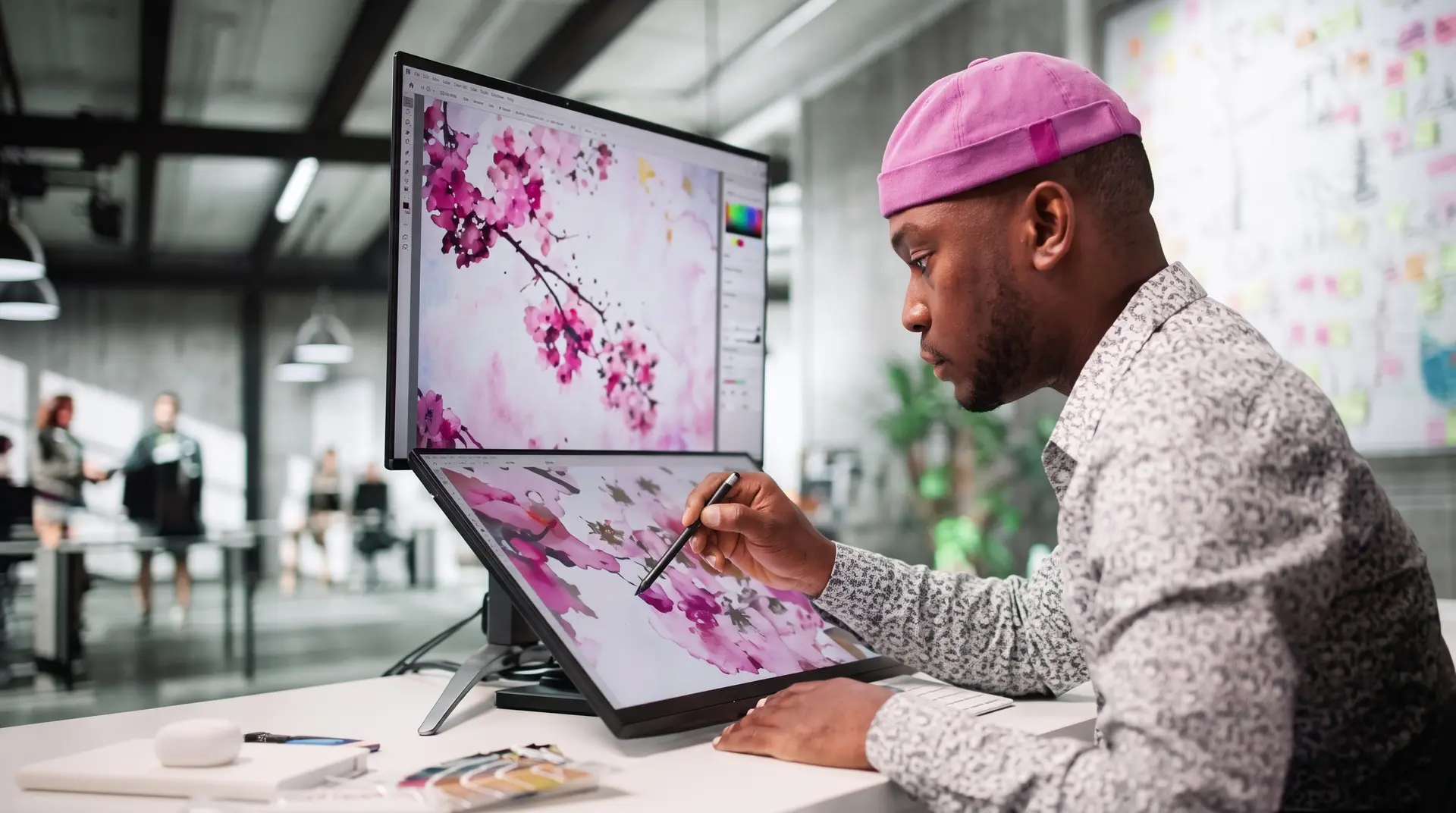
The 2D/3D computer graphics designer is a professional specialising in digital visual creation. They design, model, animate and render two- or three-dimensional graphic elements for a range of media, including advertising, the web, video games, film, architecture and corporate communications. They use specialised software to turn ideas or concepts into visually appealing and technically optimised images, scenes or animations.
Main duties
- 1. 2D/3D graphic design
- Create illustrations, mock-ups, logos, pictograms, posters or graphic interfaces.
- Create 3D objects, characters, sets and environments according to the project's requirements.
- Comply with brand guidelines, visual codes and technical constraints.
- 2. Modelling and animation
- Model 3D shapes from drawings or real-life references.
- Animate objects or characters (rigging, skinning, facial animation, movements).
- Integrate animations into coherent, dynamic and immersive scenes.
- 3. Texturing and rendering
- Apply textures, materials, lighting and special effects for a realistic or stylised rendering.
- Produce the final output (still images or videos), optimising file size and quality.
- Use rendering engines such as V-Ray, Arnold, Blender Cycles, etc.
- 4. Participation in multimedia production
- Work with developers, editors, designers, project managers or architects.
- Integrate creations into games, videos, presentations, websites or applications.
- Adapt visuals for different media (print, screen, VR, mobile, etc.).
- 5. Technical monitoring and updating
- Undertake continuous training in software (Photoshop, Illustrator, After Effects, Blender, 3ds Max, Maya...).
- Keep up with visual, artistic and technological trends in the field.
- Adapt creative techniques to innovations (virtual reality, generative AI, etc.).
Depending on the role or sector, the professional may be known as
- Graphic designer
- Multimedia Graphic Designer
- Graphic Designer
- Motion designer
- Digital illustrator
- Desktop Publishing Layout Designer
- Web Designer (with associated skills)
- 2D/3D animator
The occupation may be practised
- In a communications or advertising agency
- In a company (marketing or communications department)
- In the media (TV, press, web)
- As a freelancer / self-employed professional
- In a publishing house or printing works
- In tech start-ups or video game studios
Career opportunities
- Communication or design agencies
- Audiovisual production companies
- Video game or animation studios
- Public bodies (for visual communication)
- E-commerce or digital businesses
- Freelance work (services for businesses or individuals)
The professional can progress to
- Artistic Director (DA)
- Graphic Project Manager
- Visual Communications Manager
- UX/UI Designer
- Graphic Design Trainer
- Entrepreneur (setting up a graphic design studio or agency)
Skills acquired on completion of the course
- Mastery of Adobe Illustrator
- Mastery of Adobe Photoshop
- Adobe InDesign
- 3D modelling
- Building static websites (HTML, Flash...)
- Lighting and 3D Rendering
- Artificial Intelligence and Graphic Design
16 modules. Tap a module to see what it covers.
- History of graphic design and typology of visual media
- Basic principles of visual communication
- Layout standards (margins, grids, alignment)
- Typographic choices and colour harmonisation
- Print format, resolution and technical constraints
Detailed programme
Admission requirements
To enrol, prepare these items. The centre helps with your file, and training starts once the first instalment is paid.
- The registration form, filled in at enrolment
- A photocopy of your ID card or birth certificate
- Two 4 x 4 passport photos, less than 3 months old
- One ream of paper
- The first instalment of the tuition: 40%
- The registration fee
Ready to start in multimedia graphic design?
Same field: Digital
Networks and telecommunications
Install, configure, maintain and secure company and operator networks.
See the sheetApplication development
Design, build, test and maintain web, mobile and desktop applications.
See the sheetCybersecurity
Protect information systems, data and networks against threats.
See the sheetData analyst
Collect, process and analyse data to help the company make decisions.
See the sheetVideo editing
Edit films and adverts, from shooting to final render: Premiere Pro, After Effects and DaVinci Resolve.
See the sheetIT systems maintenance
Install, repair and maintain an IT estate: hardware, peripherals, systems and security.
See the sheetTell us what you want to do. We point you to the course that leads there and follow your enrolment.
- Personal guidance
- Training focused on employment
- A work placement
- Support before, during and after
+237 620 10 03 71contact@oceanicformation.comoceanicconseil@gmail.com
Address : Cité des Palmiers, yellow and black tiled building, before Afriland First Bank (coming from Total Carrefour), Douala
View on the map